
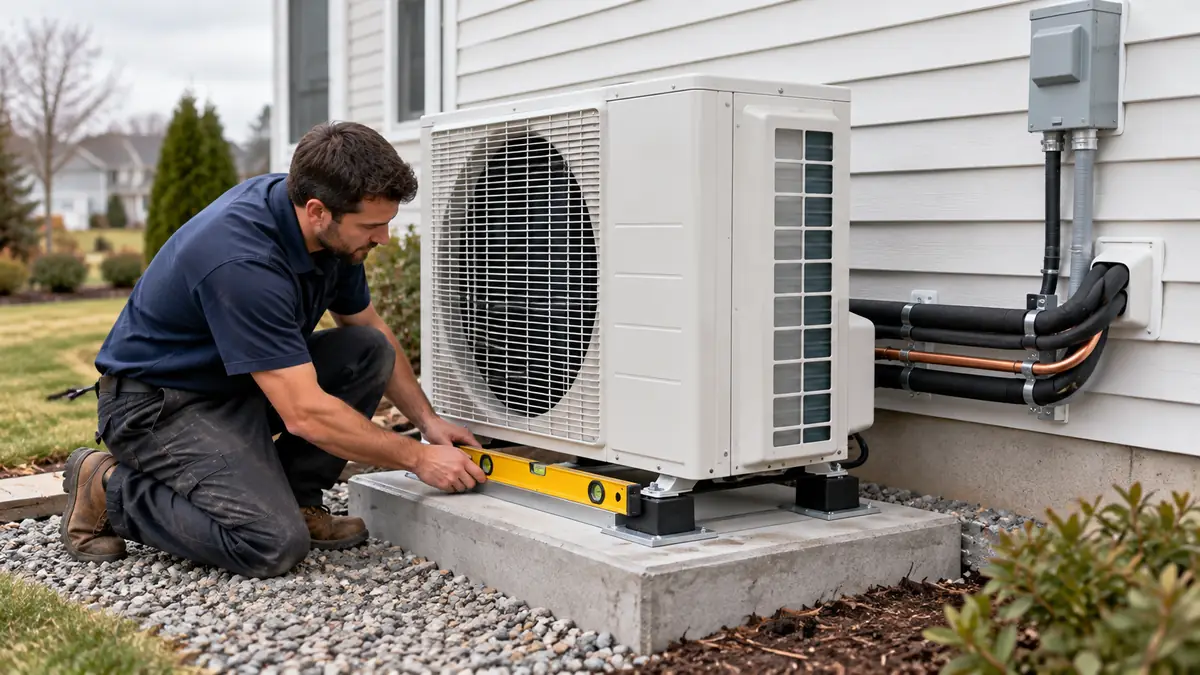
Heat pump installation cost in 2026 usually runs from about $5,000 for a single room or a small home to $25,000 or more for a whole-home ducted system in a high-cost state. That is a wide range, and the price you are quoted depends mostly on three things: the size of your home, the type of system and how much work the house needs before the heat pump goes in.
This guide breaks the cost down by home size and system type, shows what raises or lowers a quote and explains which incentives still exist after the federal tax credits ended. If you are still deciding whether a heat pump suits your home, start with our guide to how a heat pump works.

Most U.S. homeowners pay between $5,000 and $15,000 to install an air-source heat pump, and Fixr puts the national average at about $8,350. A single-zone ductless mini-split costs less. A whole-home system with new ductwork, an electrical panel upgrade or a cold-climate model can pass $20,000. Prices are highest in states such as Massachusetts and California. Get at least three itemized quotes based on a load calculation, and check state and utility rebates before you sign.
National average
$8,350
Typical installed price, Fixr (January 2026)
Average quote
$15,393
Before incentives, EnergySage Marketplace (March 2026)
Share that is labor
About 1/3
Of a ducted job, Massachusetts invoice study (2026)
In this guide
- Heat pump installation cost by system type
- Heat pump installation cost by home size
- Why heat pump price figures disagree
- What raises or lowers a heat pump quote
- Cost by efficiency (SEER2)
- Labor, permits and what a quote should include
- Heat pump prices by state
- Heat pump incentives in 2026
- How to get a fair heat pump quote
- Frequently asked questions
Heat pump installation cost by system type
The type of system sets the starting heat pump cost. Ducted systems connect to existing ductwork, so they suit homes that already have central air or a forced-air furnace. Ductless mini-splits put one or more wall units inside and need no ducts, which makes them the easier choice for additions, older homes with radiators and single rooms.
| System type | Typical installed cost | Best for |
|---|---|---|
| Single-zone ductless mini-split | $3,000–$6,000 | One room, an addition or a garage conversion |
| Multi-zone ductless mini-split | $8,000–$20,000 | Homes without ducts, 2–5 indoor units |
| Ducted air-source heat pump | $8,000–$18,000 | Homes with existing ducts in good shape |
| Cold-climate ducted heat pump | $12,000–$22,000 | Northern states with long stretches below 5°F |
| Hybrid (dual fuel) system | About $14,400 average quote | Keeping a gas furnace as the backup |
| Geothermal (ground-source) | $20,000–$40,000+ | Large lots, long ownership, highest efficiency |
Per ton of capacity, the heat pump cost is higher for ductless systems. EnergySage reports average quotes of $3,790 per ton for ducted systems against $9,163 per ton for ductless ones, because every indoor head needs its own line set, wiring and mounting. In Massachusetts, program invoices show the ductless price per ton rising from $5,658 in 2021 to $7,203 in 2024, driven by labor and extra parts rather than the equipment itself.
Good to know
Geothermal systems lost their 30% federal tax credit too. The residential clean energy credit does not apply to expenditures made after December 31, 2025, which raises the real cost of a ground-source system by thousands of dollars.
Heat pump installation cost by home size
Home size is the next big factor in heat pump installation cost. Bigger homes need more heating capacity, measured in tons (1 ton = 12,000 BTU per hour). More capacity means a larger outdoor unit, a larger air handler and, often, more ductwork. The chart shows typical installed prices for a central air-source heat pump by floor area.

| Home size | Typical capacity | Installed cost |
|---|---|---|
| 1,000 sq ft | About 2 tons | $5,000–$8,000 |
| 1,500 sq ft | 2.5–3 tons | $6,700–$14,000 |
| 1,800 sq ft | 3–4 tons | $8,000–$20,000 |
| 2,000 sq ft | 3–4 tons | $8,000–$20,000 |
| 2,500 sq ft | 3.5–5 tons | $9,500–$22,000 |
| 3,000 sq ft | 4–6 tons | $15,000–$25,000 |
Floor area is only a starting point. A well-insulated 2,000 sq ft house in Georgia may need half the capacity of a drafty one in Minnesota. That is why the capacity should come from a room-by-room load calculation, known as a Manual J, rather than a square-foot rule. An oversized heat pump costs more up front, cycles on and off and controls humidity poorly.
Floor area also has a small direct effect on the cost to install a heat pump. In the TECH Clean California cost study, each extra 100 sq ft added about $69 to a project even when the system size stayed the same, because longer duct and refrigerant runs take more material and time.
Why heat pump price figures disagree
If you have read other guides, you have probably seen an average heat pump cost anywhere from $8,000 to $25,000. They are not necessarily wrong. They measure different jobs in different places.
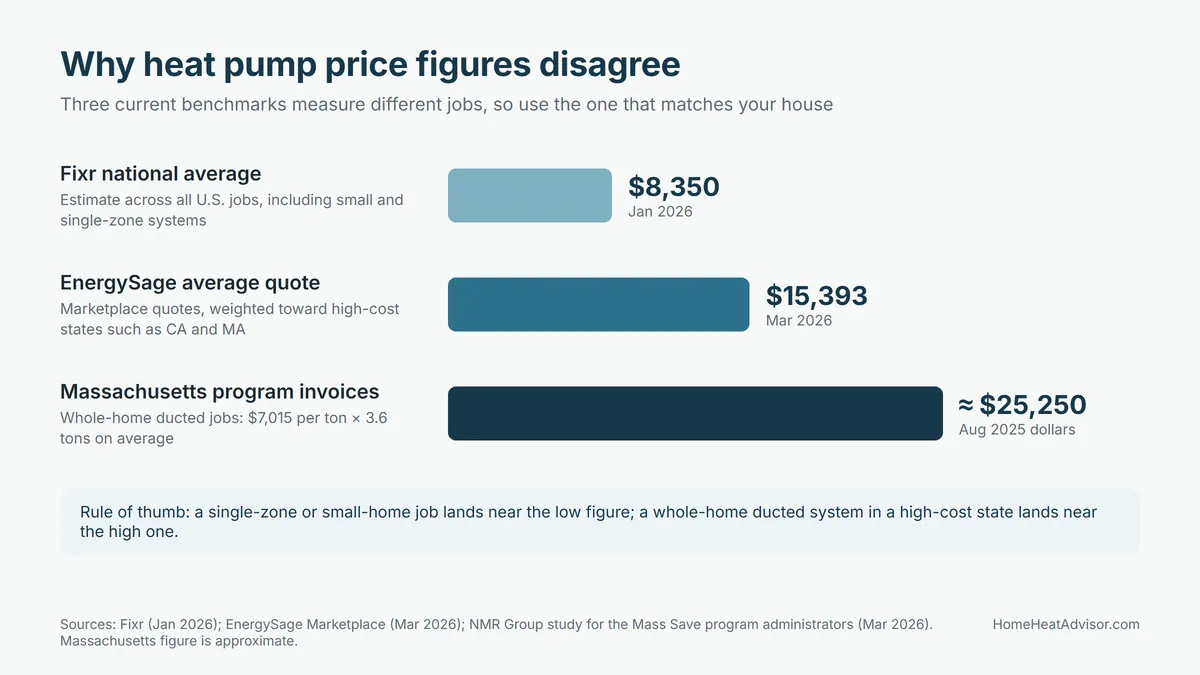
- Fixr, about $8,350. A national estimate across all kinds of jobs, including single-zone mini-splits and like-for-like swaps of an existing heat pump. A good guide for smaller or simpler installs.
- EnergySage, $15,393. The average of quotes requested on its marketplace. Many of those homeowners live in high-cost states such as California and Massachusetts, and many want whole-home systems.
- Massachusetts program invoices, roughly $25,000. The 2026 Massachusetts pricing study analyzed 594 ducted and 453 ductless jobs from 2023–2024. Ducted projects averaged $7,015 per ton at an average size of 3.6 tons, often in older homes replacing oil or gas heat completely.
Our rule: if you are replacing an existing central AC or heat pump in a mid-size home outside the Northeast and California, expect a price near the lower figures. If you are converting a whole older home from a boiler or furnace in a high-cost state, expect a price near the top. We explain how we compare price sources on our how we research costs page.
What raises or lowers a heat pump quote
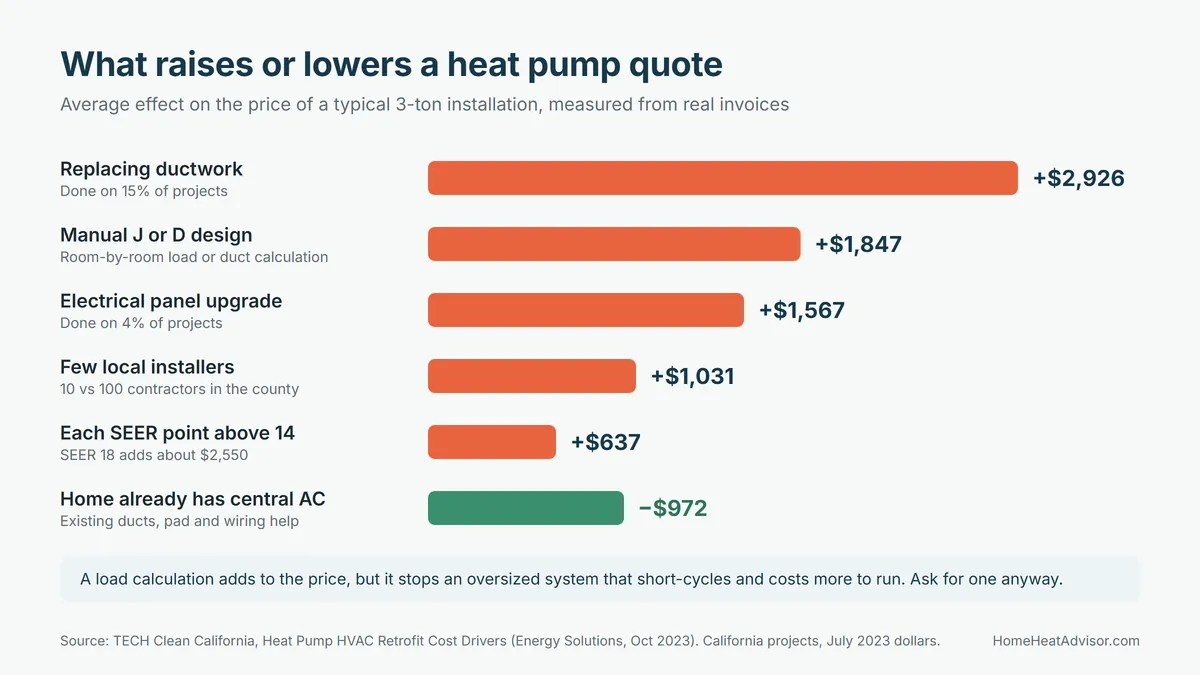
Two quotes for the same house can put the heat pump installation cost thousands of dollars apart because of the extra work included. The best data on these add-ons comes from TECH Clean California, which analyzed invoices from California heat pump installations completed between December 2021 and June 2023. It measured the average effect of each feature on the cost of a typical 3-ton job.
Ductwork: the biggest add-on
Replacing ducts added about $2,926 on average and was needed on 15% of projects. Leaky, undersized or damaged ducts waste the heat pump’s output, so an installer who checks them is doing you a favor. Ask for duct sealing or partial replacement to be priced as a separate line item.
Electrical panel and wiring
A panel upgrade added about $1,567 in California and was needed on only 4% of projects. Massachusetts invoices tell a similar story: only 4% included an electrical service upgrade, and wiring made up less than 10% of the cost of a ducted job. Older homes with 60- or 100-amp service are the ones most likely to need one.
Load calculation and duct design
A Manual J load calculation or Manual D duct design added about $1,847 on average and was done on only 7% of projects. It is still worth paying for. A correctly sized system costs less to run and lasts longer than one sized by guesswork.
Efficiency, competition and existing AC
- Higher efficiency: each SEER point above 14 added about $637.
- Fewer local installers: projects in counties with about 10 participating contractors cost about $1,031 more than those in counties with 100.
- Older homes: each extra 10 years of average home age in a neighborhood added about $826.
- Existing central AC: lowered the price by about $972, since the ducts, pad and wiring are often already in place.
Money-saving tip
If your central air conditioner is near the end of its life, replace it with a heat pump rather than a new AC. You reuse the same ducts and wiring and get heating as well as cooling for a similar installation job.
Cost by efficiency (SEER2)
Efficiency ratings drive the equipment price, and with it the total heat pump cost. SEER2 measures cooling efficiency and HSPF2 measures heating efficiency; higher numbers mean lower running costs and higher prices.
| SEER2 rating | Typical installed cost |
|---|---|
| 14–15 | $5,000–$12,000 |
| 16–17 | $7,000–$15,000 |
| 18–19 | $10,000–$18,000 |
| 20 and up | $15,000–$25,000 |
In a cold climate, look at the heating numbers first. A cold-climate model that keeps its output at 5°F will cost more but lean less on expensive backup heat. Our guide to emergency heat vs auxiliary heat shows what backup heat costs to run, and our cold-weather guide explains how output drops as it gets colder.
Labor, permits and what a quote should include
Labor is a large part of the cost to install a heat pump. In Massachusetts, labor made up about a third of the cost of a ducted installation. Fixr puts HVAC labor at $75–$125 an hour and permits at $50–$300. In the California data the average project took about five days from start to finish, and longer jobs cost more: a 10-day job ran about $1,207 more than a one-day job.

A complete quote for heat pump installation should list:
- The outdoor unit and the indoor air handler or wall units, with model numbers
- Line set, pad or wall bracket, condensate drain and thermostat
- Removal and disposal of the old equipment
- Electrical work: the new circuit, disconnect and any panel upgrade
- Duct sealing, repair or replacement, if needed
- Backup heat strips or how an existing furnace will be used
- Permits, start-up, commissioning and the warranty terms
This matches how we define installed cost: equipment, labor, line set, pad, thermostat and removal of the old system are included, while panel upgrades, ductwork, permits and backup heat are listed separately so you can compare like with like.
Heat pump prices by state
Where you live changes the heat pump installation cost as much as the system you choose. These are average quotes before incentives from EnergySage.
| State | Average quote before incentives |
|---|---|
| Massachusetts | $24,482 |
| Nevada | $22,550 |
| California | $19,844 |
| Colorado | $17,780 |
| Pennsylvania | $16,080 |
| Texas | $11,874 |
| Florida | $10,340 |
| North Carolina | $9,757 |
Prices are higher where labor costs more, where homes are older and where systems must handle real winters. Warmer states such as Florida and North Carolina have lower averages, likely because many homes there already have a heat pump or central AC with ducts that can be reused.
Heat pump incentives in 2026
Incentives can cut your heat pump cost, but they changed a lot this year. The federal energy efficient home improvement credit, which paid 30% of the cost up to $2,000, does not apply to equipment placed in service after December 31, 2025. The 30% credit for geothermal heat pumps ended on the same date. Here is what is left:
- Federal HEEHR rebates (formerly HEAR). The Home Electrification and Appliance Rebates program offers up to $8,000 toward a heat pump for income-qualified households. Below 80% of area median income it can cover up to 100% of the cost; between 80% and 150%, up to 50%. Since May 29, 2026, Energy Department guidance limits these rebates to replacing existing electric equipment with more efficient electric equipment, plus new construction: switching from a gas, oil or propane furnace no longer qualifies, and states may require insulation and air sealing first. States run the programs, funding is limited and several states have paused or closed theirs, so check your state energy office before counting on it.
- Utility and state rebates. These are now the main source of help for most households. In Massachusetts, Mass Save’s whole-home rebate is based on system size, at $2,650 per ton up to $8,500 in 2026 when the heat pump replaces your main heating system.
- Local programs. Search your ZIP code on DSIRE and check your electric utility’s website, since many offer rebates or low-interest loans.
Before you sign
Many rebates require a participating contractor, specific equipment or approval before work starts. Ask each installer which rebates they will apply for on your behalf and get the amount in writing on the quote.
For more on rebates by program, browse our heat pump rebates guides.
How to get a fair heat pump quote
The surest way to keep your heat pump installation cost down is to make contractors compete on the same scope of work.

- Get three quotes. The California data shows that more competition lowers prices.
- Ask for a load calculation. A contractor who sizes by square footage alone may oversize the system.
- Compare line by line. Make sure each quote includes the same items from the list above.
- Check the cold-weather rating. In the North, ask for the heat output at 5°F, not just SEER2.
- Ask about the backup. Find out whether you will get heat strips, keep your furnace or neither.
- Confirm the warranty. Ask how long the parts and labor are covered and whether the equipment must be registered.
Replacing a system that has failed? If your current heat pump is not heating or keeps icing up, those guides show which faults are worth repairing before you pay the full cost to install a heat pump. Our heat pump pros and cons guide covers the trade-offs of switching from gas or oil, and our guide to the cost to replace a furnace with a heat pump covers the extras a switch adds.
Frequently asked questions
How much does it cost to install a heat pump?
The cost to install a heat pump is usually $5,000–$15,000. Fixr puts the national average at about $8,350. Whole-home systems in high-cost states, or jobs that need new ducts or a panel upgrade, can cost $20,000–$25,000 or more.
How much does a heat pump cost for a 2,000 sq ft house?
The heat pump installation cost for a 2,000 sq ft house is usually $8,000–$20,000 for a 3- to 4-ton central system. The low end fits a simple swap of an existing system; the high end fits a cold-climate model or a job that needs ductwork.
Is a heat pump cheaper to install than a furnace and AC?
It can be when both need replacing, because one heat pump does both jobs. Replacing only a gas furnace usually costs less up front, but our 15-year heat pump vs furnace comparison adds running costs. Ask installers to quote both options so you can compare.
Why is a ductless mini-split so expensive per ton?
Every indoor unit needs its own line set, wiring, drain and mounting, so labor and materials rise with each zone. EnergySage quotes average about $9,163 per ton for ductless against $3,790 for ducted systems.
Is there still a federal tax credit for heat pumps?
No. The 25C credit ended for equipment placed in service after December 31, 2025, and the geothermal credit ended on the same date. Income-qualified households in some states may get HEEHR rebates when replacing electric heating, and many utilities still offer rebates.
How long does a heat pump installation take?
A simple swap of an existing system can be done in a day or two. In the TECH Clean California data the average project took about five days from start to finish, longer when ductwork or electrical upgrades were involved.
Sources
- Fixr: Heat pump installation cost (January 2026)
- EnergySage: How much does a heat pump cost? (March 2026)
- NMR Group for the Massachusetts Program Administrators: 2024/2025 Residential Heat Pump Pricing Study (March 2026, August 2025 dollars)
- TECH Clean California / Energy Solutions: Heat Pump HVAC Retrofit Cost Drivers (October 2023, July 2023 dollars)
- IRS: Energy efficient home improvement credit
- IRS: Residential clean energy credit
- U.S. Department of Energy: Home Energy Rebates programs
- California Energy Commission: Residential energy rebate programs
About this guide
Published by HomeHeatAdvisor. The heat pump installation cost figures in this guide come from the sources listed above, checked in October 2026. Each source measures a different set of jobs and dollar year, which we state next to the figures. See how we research costs for our method. No installer or manufacturer pays to be included. Your own quotes will vary with your home, climate and installer. Our editorial policy explains how we research, fact-check and update our guides. Spotted an error? Let us know.